Party & groups · 8 min read
How to Play Undercover: Rules, Winning Strategy and Word Pair Ideas
The complete guide to Undercover (Who Is the Spy): how a round works, the Civilian, Undercover and Mr. White roles, how to give clues without giving yourself away, and word pairs that make great rounds.
In this article
- What is Undercover?
- The three roles: Civilian, Undercover and Mr. White
- How to play, step by step
- How to win as a Civilian
- How to win as the Undercover
- How to play Mr. White: bluffing from nothing
- Undercover word pairs that make great rounds
- A phone each, or one phone passed around?
- House rules and variations
- Common beginner mistakes
- Why Undercover is so addictive
What is Undercover?
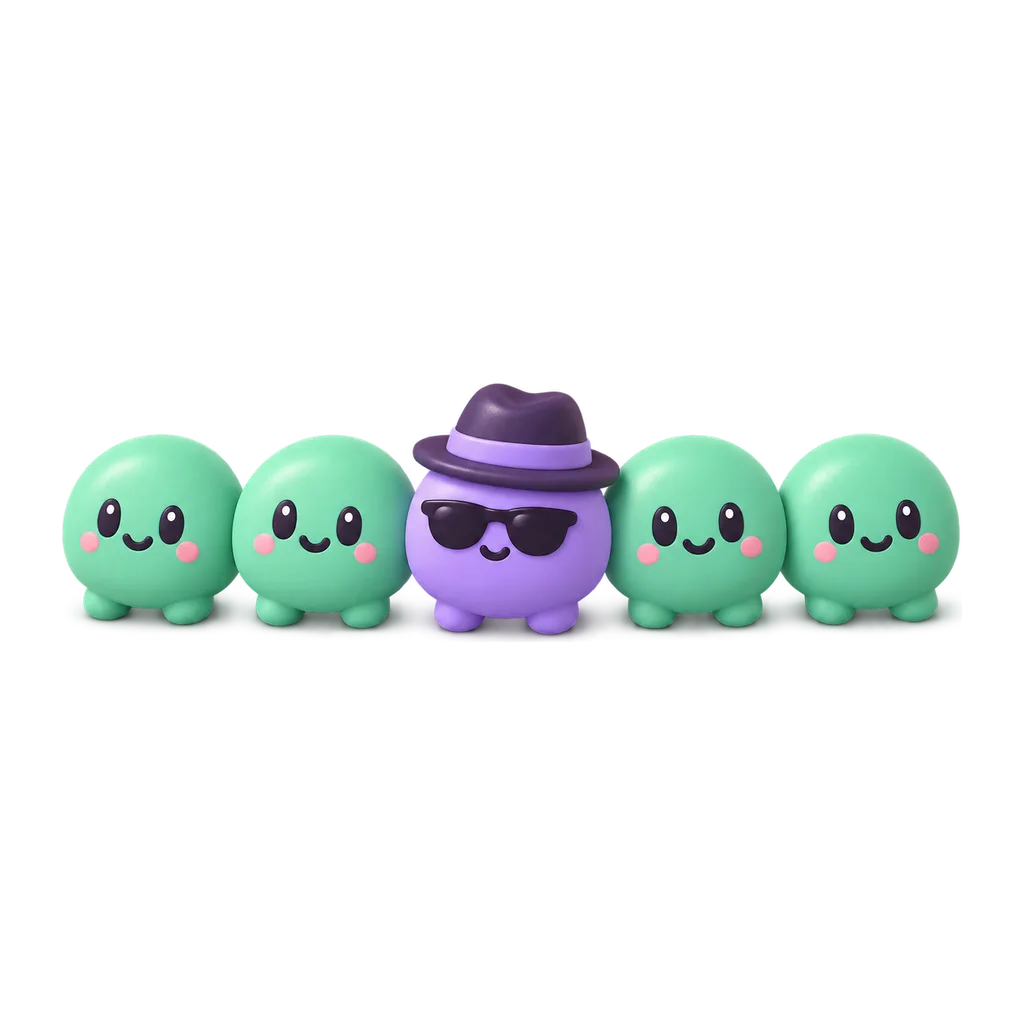
Undercover is a social deduction word game for three to twenty players. Almost everyone gets the same secret word — say, "Coffee". One or two players, the Undercovers, get a word that is close but not the same — "Tea". Nobody is told which group they are in. The Undercover usually does not know they are the odd one out until a few clues in.
Each round, every player gives a single clue about their word, then the table votes someone out. If every infiltrator is caught, the Civilians win. If the infiltrators survive until only a couple of Civilians remain, they win instead. The rules take a minute to explain; a single round can keep a table arguing for ten.
You will also see it called "Who Is the Spy" or "Who Is the Undercover". It grew out of a party game that became hugely popular in China after appearing on television variety shows, and it has had a second life on TikTok and YouTube, where the moment someone is caught bluffing makes for great clips.
You can play Undercover on pickagame in the browser, with no app to install — either with everyone on their own phone in a room, or with one phone passed around the table.
The three roles: Civilian, Undercover and Mr. White
Strategy only makes sense once you know what each role knows — and, more importantly, what it does not. The fun lives in those gaps.
- Civilians are the majority. They share one word and win once every Undercover and Mr. White is out. Their weakness is that they do not know they are Civilians either, so they can end up suspecting each other.
- Undercovers get the similar word. They realise they are different only when other clues do not quite fit. From that moment their job changes: blend in, work out the Civilian word, and give clues that fit both words at once.
- Mr. White gets no word at all — the screen just says "You are Mr. White". They have to invent clues from what they hear. If voted out, Mr. White gets one guess at the Civilian word, and wins on the spot if it is right.
How to play, step by step
This is the standard flow used in our Undercover game, and the one most groups play.
- Set up. At least three players; five to ten is the sweet spot. Choose how many Undercovers (roughly one per four or five players) and whether Mr. White plays.
- Deal the words. On separate phones, everyone taps their own card. On one phone, pass it round and let each person hold the card to peek, then hide it.
- Give clues in turn. The speaking order is shuffled each round. One clue per person — a word or short phrase — and never the word itself.
- Discuss. Once everyone has spoken, accuse, defend and pick apart the clues that felt off.
- Vote. Everyone votes for the player they suspect. The most-voted player is out and their role is revealed. On a tie, nobody goes out and the table goes again.
- Repeat until one side wins. Points carry across rounds, so there is always a rematch.
How to win as a Civilian
The most common Civilian mistake is a clue that is too obvious. If the word is "Coffee" and you say "black, bitter, caffeine", congratulations: the Undercover holding "Tea" now knows exactly what the Civilians have and can blend in perfectly. A good Civilian clue is specific enough to prove you know the word, but vague enough that someone with a neighbouring word cannot simply copy it.
For Coffee against Tea, "grounds" is far smarter than "hot". Both drinks are hot, but grounds belong to coffee. The other Civilians nod along; the Undercover starts to sweat.
Watch whoever speaks last. Late speakers have the most information and the easiest time blending in, so a suspiciously safe clue that just echoes the theme is worth a second look. The first speaker, on the other hand, often sounds odd while being perfectly innocent — they had nothing to go on.
Above all, do not rush the vote. A wrong vote does not just cost you a Civilian; it gives the infiltrators another round to learn your word.
How to win as the Undercover
Step one is noticing. Listen to the first two or three clues. If they all fit your word, you are probably a Civilian. If something is slightly off — you have "Tea" and people are saying "grounds" and "espresso" — you are very likely the Undercover.
Then look for the overlap. Coffee and tea are both morning drinks, both take sugar, both come iced. Clues like "breakfast" or "sugar cube" are safe in both worlds. Avoid the tell-tale features of your own word, like "tea bag" or "jasmine", which hand the table your secret.
The advanced move is to join the hunt. Silent Undercovers get voted out; active ones who analyse clues and steer suspicion towards a Civilian with an unlucky clue often survive to the end. Just do not overdo it — the loudest accuser in the room draws suspicion too.
How to play Mr. White: bluffing from nothing
Mr. White is the hardest role and the most satisfying one to pull off. With no word, you never want to speak first — which is why our game never puts Mr. White at the start of the order.
The best Mr. White clues are general but delivered with confidence: "tasty", "every day", "in the morning". Meanwhile, gather evidence. Every clue from someone else is a piece of the puzzle. If you hear "grounds", "caffeine" and "late nights", you already have a strong guess.
If you are caught, do not panic — the guess is your big moment. Line up every clue you heard, find the word that fits all of them, and say it with conviction. One right guess can turn the whole game around.
Undercover word pairs that make great rounds
A good pair is close enough for the Undercover to survive a round or two, and far enough for a sharp table to catch them. Too close ("trainers" and "sneakers") and everyone is lost; too far ("cat" and "aeroplane") and the Undercover is exposed on the first clue. Some pairs that reliably work:
- Food: Pizza and Burger, Pancakes and Waffles, Sushi and Ramen, Fries and Crisps, Curry and Stew.
- Drinks: Coffee and Tea, Smoothie and Milkshake, Lemonade and Iced Tea.
- Places: Beach and Lake, Museum and Gallery, Airport and Train Station, Hotel and Hostel, Café and Bakery.
- Transport: Bike and Scooter, Taxi and Bus, Train and Tram.
- Animals: Cat and Dog, Tiger and Lion, Crocodile and Alligator, Butterfly and Moth.
- Everyday life: Shower and Bath, Breakfast and Lunch, Nap and Lie-in.
A phone each, or one phone passed around?
A phone each is best when everyone has a phone and a signal. One person opens a room, the others join with a code or link. Words appear only on their owner's screen, votes are cast privately, and Mr. White types their own guess. Nobody can peek, and it even works over a video call.
One phone passed around is perfect for family gatherings, no-signal cabins, or when not everyone has a phone. The ritual — cover the screen, pass, peek behind your hand — is part of the fun. Voting is done by pointing on the count of three.
Both modes are in Undercover. For a long evening, mix in Truth or Dare for whoever gets voted out, or switch to Tebak Kata, our heads-up charades game, to get everyone moving and laughing again.
House rules and variations
After a few rounds, groups start inventing rules. Some popular ones that keep things fair:
- Clue timer. Five seconds per clue. Undercovers slip up far more often.
- One-word clues only. Harder for everyone, and the discussion gets sharper.
- Theme night. Every pair comes from one theme — films, football, your city — for themed parties.
- Light forfeits. Whoever is caught as the Undercover in round one takes a Truth or Dare card.
- Homemade pairs. Someone sitting out writes pairs about your own group. They almost always become in-jokes that last for years.
Common beginner mistakes
Clues that are too close. For "Pizza", saying "pepperoni" is almost saying the word. Your fellow Civilians get it — and so does the Undercover holding "Burger".
Voting for revenge, not evidence. Knocking out the friend who beat you last round is satisfying, but it almost always hurts your own side.
Endless discussion. Debates that go round in circles wear everyone out. Cap it at two or three minutes before the vote to keep the game quick and lively.
Why Undercover is so addictive
Undercover blends two things our brains love: solving puzzles and reading people. Every clue is evidence, every face is evidence, and landing the right accusation feels like finishing a hard puzzle. If you enjoy that feeling, you might like our piece on why brains love patterns.
It is also fair across ages. No special knowledge, no fast fingers — a thirteen-year-old can beat their parents. That is why it is a staple for family get-togethers, office parties and New Year's Eve. For more games that work with a crowd, see our guide to party games for groups.
Questions people ask
How many players do you need for Undercover?
At least three and up to twenty. Five to ten is ideal, with one or two Undercovers and a Mr. White.
Does the Undercover know they are the Undercover?
No. They see a word like everyone else, and only start to suspect when other clues do not match it.
What is the difference between Undercover and Mr. White?
The Undercover has a word close to the Civilian word; Mr. White has no word at all. If voted out, Mr. White gets one guess at the Civilian word to win.
What happens on a tied vote?
Nobody goes out. Everyone gives one more clue and the table votes again.
Do I need an app to play Undercover?
No. Undercover on pickagame runs in the phone browser, either with one phone passed around or with everyone joining a room on their own phone.
Play something related
Keep reading
- Party & groups · 8 min read120+ Truth or Dare Questions: Clean, Funny and Daring (Plus How to Play)Truth questions and dares for friends, couples, families and office parties, sorted by level, with the rules that keep the game fun instead of awkward.
- Party & groups · 7 min readHeads-Up Charades: How to Play, Category Ideas and How to Give Great CluesHow to play the phone-on-your-forehead word guessing game, category ideas for kids, families and work, tricks for clues that land fast, and rule twists that make rounds louder.
- Party & groups · 7 min readHow to Make a Fun Online Quiz (Kahoot-Style) for Class, Work and PartiesA practical guide to building an interactive quiz: writing good questions, choosing how many and how long, running it live with players on their phones, and theme ideas for classrooms, team events and family nights.